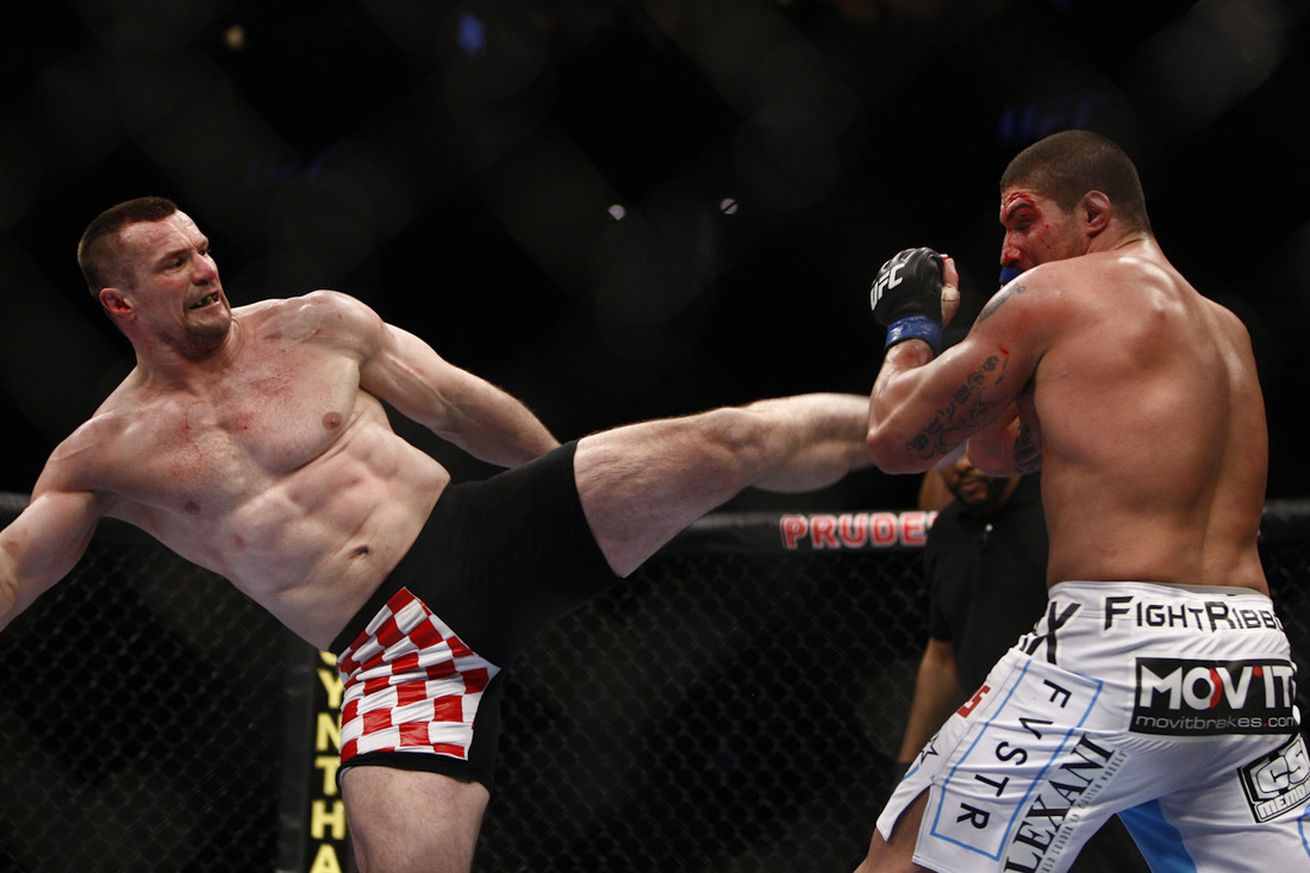

When you think of striking power in MMA history, Mirko “Cro Cop” Filipović stands among the legends. His journey—from a Croatian village, through warzones, to the world’s biggest fight arenas—has shaped combat sports forever. This is the rise, fall, and legacy of a man whose life reads like a movie script.
Roots in Croatia: Training in a Garage, Dreams of Greatness
Mirko Filipović was born September 10, 1974, in Prvača, Croatia, near Vinkovci. Raised in a modest working-class family, Mirko’s first love was athletics, particularly sprinting. That changed everything the day he saw Jean-Claude Van Damme’s “Bloodsport” on TV. Inspired by the martial arts hero, young Mirko traded track shoes for makeshift boxing bags, pouring concrete into bars and stuffing awnings with sawdust just to practice.
His martial arts journey began early with taekwondo at age seven and later karate. As conflicts tore through Croatia in the 1990s, Mirko’s family suffered loss when his father passed away. Amid the chaos, Mirko joined the Croatian Army, helping defend his country while trying to keep his fighting dreams alive.
A key moment arrived when Mirko’s mother received a telegram confirming his admission to the police academy. With it, new doors opened. Soon, Mirko was both a police officer and a dedicated martial artist, even joining Croatia’s elite Lučko Anti-Terrorist Unit. It was here he earned the nickname “Cro Cop,” short for Croatian Cop—an identity that never left him.
Building a Legend: From Kickboxing to Pride FC
Early Kickboxing Stardom
Mirko Cro Cop wasted no time making an impact in kickboxing. His powerful southpaw style and signature left high kick became his calling cards. After defeating renowned French fighter Jérôme LeBanner in his pro debut, Mirko quickly rose through K-1, battling legends like Ernesto Hoost and Remy Bonjasky. By 2000, he was already recognized as one of the most dangerous heavyweights in the sport.
Mirko Cro Cop’s Early Kickboxing Highlights
| Year | Achievement |
|---|---|
| 1996 | Pro debut, K-1 victory over Jérôme LeBanner |
| 1999 | K-1 World Grand Prix finalist |
| 2000 | K-1 World Grand Prix finalist (Fukuoka) |
| 1997 | Croatian National Amateur Boxing Champion |
Beyond kickboxing, Mirko excelled in amateur boxing, earning three national titles and representing Croatia at the World Championships.
The Move to MMA: Pride FC and Global Fame
Frustrated by pay disputes in kickboxing, Mirko entered mixed martial arts in 2001, joining Japan’s Pride Fighting Championships.
His early Pride fights featured special rules catering to his striking, limiting time on the ground to hide his inexperience. Victories against Kazuyuki Fujita, Nobuhiko Takada, and Yuji Nagata proved he was more than just hype.
As Mirko built confidence, he eventually fought under standard MMA rules. His feared left kick devastated icons like Heath Herring and Igor Vovchanchyn. Perhaps his most iconic knockout came against Vanderlei Silva, another legend, sending shockwaves through the Japanese fight scene.
The phrase, “Right leg hospital, left leg cemetery,” wasn’t just a slogan—it described the fate of those who met his left shin.
The Battles and the Belt: Pride Grand Prix Glory
Mirko’s technical brilliance, fight IQ, and toughness earned him a shot at Antonio Rodrigo Nogueira for Pride’s interim heavyweight belt in 2003. Although he dominated early, a ground submission exposed his limited grappling. But Mirko didn’t waver. He trained relentlessly, fixing holes in his game.
Setbacks followed (like a shock KO loss to Kevin Randleman), but Mirko rebounded with seven straight wins. He avenged his loss to Randleman, took out top contenders like Josh Barnett and Mark Coleman, and went head-to-head in a classic with Fedor Emelianenko. Although he didn’t win the title, Mirko’s rivalry with Fedor became legendary.
His crowning moment came in 2006, winning Pride’s Openweight Grand Prix. In one night, he head-kicked Vanderlei Silva, then defeated Barnett to finally claim a championship. As the belt went around his waist, Mirko broke down in tears—ten years of struggle, sacrifice, and sweat had led to that iconic moment.
The UFC Years: Hype, Heartbreak, and Hard Lessons
With Pride’s financial troubles mounting, stars like Mirko were courted by the UFC. He debuted in 2007 with a quick TKO win over Eddie Sanchez. Expectations were sky high. Mirko entered his second fight as a heavy betting favorite—until Gabriel Gonzaga shocked the MMA world with a head kick knockout of Cro Cop himself.
It wasn’t just a loss; it was a reversal of everything Mirko had symbolized. Injuries piled up. More losses followed, including a tough battle with Cheick Kongo marred by illegal low blows and brutal defeats at the hands of Junior Dos Santos, Frank Mir, Brendan Schaub, and Roy Nelson.
Mirko continued fighting in other promotions—the Dream organization in Japan, K-1 kickboxing, and tournaments like IGF and Rizin. Over time, the wear and tear caught up. Though he reclaimed flashes of his old brilliance, including a satisfying revenge win against Gabriel Gonzaga in their UFC rematch, the physical cost was clear.
Doping Controversy and the End of the UFC Road
In 2015, while recovering from a shoulder injury, Mirko admitted to using human growth hormone (HGH), a banned substance, to speed his recovery. He openly discussed his actions with the UFC and USADA (the anti-doping agency in charge of testing), but was handed a two-year suspension—the first under the UFC’s new policy, despite a negative test.
Mirko’s contract was terminated in 2016, leaving a bitter taste after a lifelong stance against PEDs. He felt singled out as an example, even as other fighters received shorter suspensions. For a man whose life had been all about discipline and sacrifice, this ending stung deeply.
Final Fights, Lasting Triumphs
Undeterred, Mirko continued to compete in Japan’s Rizin Fighting Federation, winning the 2016 Openweight Grand Prix at 42 years old. He also returned to Bellator, notching a revenge win over Roy Nelson.
All told, Mirko Cro Cop finished with an MMA record of 38-11-2, championship belts across top promotions, and a highlight reel second to none. His final chapter came suddenly: after suffering a minor stroke in 2019, doctors told him to hang up the gloves for good.
Life After Fighting: A Legend’s Quiet Chapter
Today, Mirko lives in Zagreb. He’s traded stadium noise for family time and a home gym. While he no longer steps into the ring, he stays fit, trains for fun, and offers advice to Croatia’s next generation of fighters.
If you want a glimpse at his record and fight history, Mirko Cro Cop’s Sherdog profile is a trusted source for stats and fight results.
His influence echoes every time a heavyweight throws a high kick, or a Croatian fighter dreams big. The aura of Cro Cop—the cold stare, the lightning left leg—endures as a reminder of what discipline and heart can achieve.
The Legacy of Mirko Cro Cop
Mirko Cro Cop is more than knockout highlights and iconic fights—he’s a symbol of toughness, resilience, and national pride. He balanced a life as an anti-terrorist commando, Member of Parliament, and world-class competitor, yet always stayed true to his roots.
He once said, “This is life,” after a brutal fight, reminding us all: success demands pain, sacrifice, and the willingness to fight—even when odds are stacked. Looking back, Mirko Cro Cop didn’t just survive the fight game. He left an imprint that MMA fans—and opponents—will never forget.
For more on Cro Cop’s career, you can find a full overview of his tournaments, matchups, and legacy in his Wikipedia profile.
Mirko Filipović’s story reminds us: sometimes, the deadliest weapon isn’t just a kick or a punch. It’s the heart, drive, and discipline of the warrior delivering it.


Leave a Comment