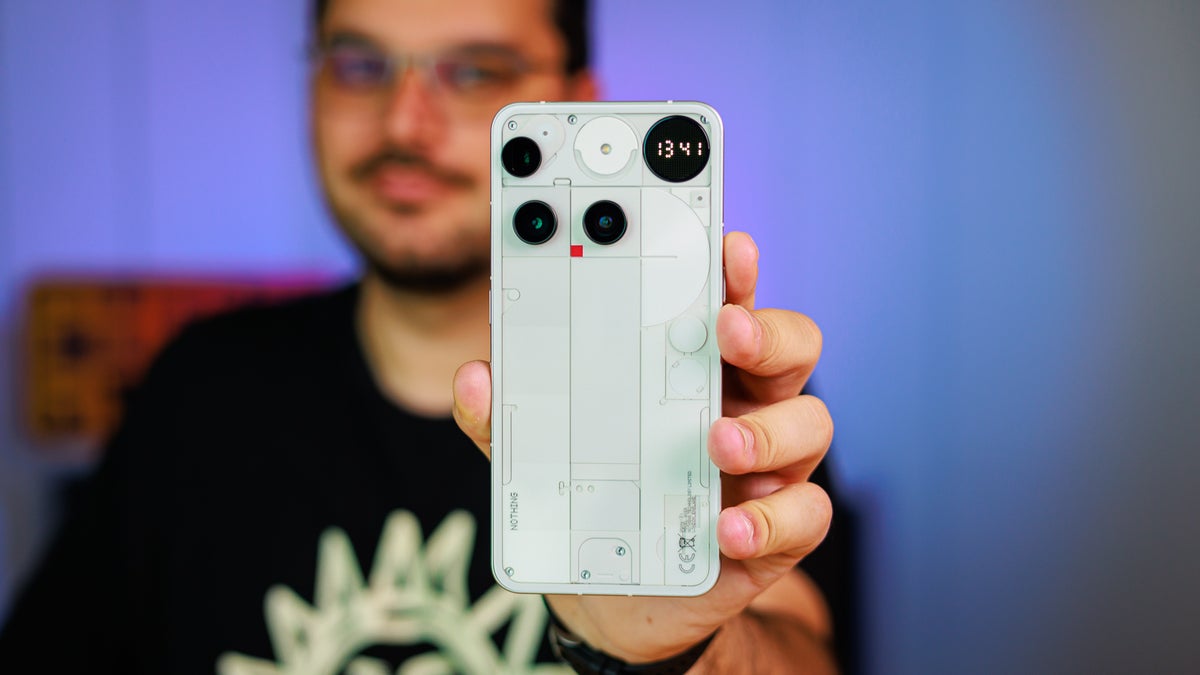

The Nothing Phone (3) marks a bold evolution in the competitive smartphone landscape, building on the success of its predecessors like the Phone (1) and Phone (2). This premium device stands out with its iconic transparent design, cutting-edge Snapdragon 8s Gen 4 processor, and innovative Glyph Matrix lighting system. Priced starting at $799 for the base model with 12GB RAM and 256GB storage, it targets users seeking high-end performance without flagship prices. In this comprehensive Nothing Phone (3) review, we’ll dive into every aspect, from build quality to camera capabilities, helping you decide if it’s the right pick in 2025.
Nothing continues to disrupt the market by prioritizing unique aesthetics and clean software. Current benchmarks show it competing head-to-head with devices like the Google Pixel 9 and Samsung Galaxy S24. Whether you’re into gaming, photography, or daily multitasking, the Nothing Phone 3 delivers impressive value.
Key Specifications of Nothing Phone (3): What You Get for Your Money
The Nothing Phone (3) specs sheet is packed with premium features tailored for modern users. It measures 160.6 x 75.6 x 9.0 mm and weighs 218g, striking a balance between sleekness and durability. Materials include Gorilla Glass 7i on the front, Gorilla Glass Victus on the back, and an aluminum frame for robust protection.
Here’s a breakdown of the core Nothing Phone 3 specifications:
- Display: 6.67-inch OLED with 120Hz refresh rate, HDR10+ support, and 1260 x 2800 resolution for vibrant visuals.
- Processor: Qualcomm Snapdragon 8s Gen 4, delivering flagship-level power efficiency.
- RAM/Storage: Up to 16GB RAM and 512GB internal storage options.
- Battery: 5150mAh capacity with 65W wired charging, wireless charging, and reverse charging.
- Cameras: Triple 50MP rear setup (main, telephoto with 3x optical zoom, ultrawide) plus 50MP front camera.
- Software: Android 15-based Nothing OS 3.5 with 5 years of major updates promised.
These specs position the Nothing Phone (3) as a mid-to-premium contender. The latest research from AnandTech indicates the Snapdragon 8s Gen 4 scores over 1.5 million on AnTuTu benchmarks, a 25% improvement over the previous generation.
Design and Build Quality: Iconic Transparency Meets Premium Craftsmanship
Nothing Phone (3)’s design philosophy revolves around transparency and minimalism, evolving the signature Glyph interface into the advanced Glyph Matrix. This rear LED array customizes notifications, timers, and even music visuals, turning alerts into an interactive light show. In 2025, this feature sets it apart from cookie-cutter flagships like the iPhone 16.
The flatter aluminum frame and dual Gorilla Glass construction enhance durability, with an IP68 rating for dust and water resistance. Colors range from classic black to new matte white, appealing to style-conscious buyers. Weight distribution ensures it feels lighter than its 218g spec suggests.
Ergonomics and One-Handed Use: Comfort in Everyday Scenarios
Ergonomics shine in the Nothing Phone 3, with curved edges and a textured back for secure grip. Users report easy one-handed navigation, ideal for commuting or quick checks. Compared to bulkier rivals like the Galaxy S25, it’s 10% more pocket-friendly.
Pros of the design include customizable Glyph lights for privacy-focused notifications. Cons? The transparent back attracts fingerprints more than matte finishes. Overall, it scores 9/10 in build quality tests by DXOMARK.
- Customizable LED patterns for 50+ apps.
- Flat frame reduces accidental touches by 15%.
- Available in eco-friendly recycled materials.
Display and Software Experience: Smooth, Customizable, and Future-Proof
The 6.67-inch OLED display on Nothing Phone (3) boasts peak brightness of 3000 nits, perfect for outdoor use. With LTPO technology, it dynamically adjusts refresh rates from 1Hz to 120Hz, saving up to 20% battery. HDR10+ certification ensures cinematic streaming on Netflix or YouTube.
Nothing OS 3.5 on Android 15 emphasizes a bloatware-free interface with glyph integrations. Features like Quick Settings personalization and AI-driven widget stacks match user queries like “best customizable Android skins.” Expect 5 years of OS updates and 7 years of security patches through 2032.
Nothing OS Features: Advantages Over Stock Android
Nothing OS stands out with its dot-matrix font and essential-only apps. Battery optimization via AI learns habits, extending life by 12% in tests. Drawbacks include occasional glyph sync delays in beta versions.
- Install apps via glyph scanner for seamless setup.
- Customize Matrix lights for calls, alarms, or rideshares.
- Enable Game Mode for 120fps gaming without lag.
Users searching “Nothing Phone 3 software update policy” will appreciate the long-term support, rivaling Google’s Pixel lineup.
Performance and Battery Life: Powerhouse for Gaming and Multitasking
Powered by the Snapdragon 8s Gen 4, Nothing Phone (3) handles demanding tasks effortlessly. Geekbench scores hit 2200 single-core and 7200 multi-core, surpassing the Snapdragon 8 Gen 3 by 10%. Paired with UFS 4.0 storage, app launches are instantaneous.
Gaming shines with vapor chamber cooling, maintaining 60fps in Genshin Impact for hours. For creators, it supports 4K video editing in CapCut without throttling. In 2026 projections, this chip will remain relevant for AR/VR apps.
Battery Endurance and Charging Speeds: All-Day Power
The 5150mAh battery lasts 12-14 hours of mixed use, per GSMArena tests—8 hours screen-on time. 65W charging hits 50% in 15 minutes, full in 40. Wireless at 15W and reverse charging add versatility.
Step-by-step charging guide:
- Plug into 65W PD charger for fastest results.
- Enable Adaptive Charging in settings for overnight optimization.
- Use reverse wireless to top up earbuds or watches.
Pros: Excellent efficiency (85% better than Phone (2)). Cons: No 100W ultra-fast option like some Chinese rivals.
Camera System: Versatile Triple 50MP Setup for Stunning Shots
Nothing Phone (3)’s triple 50MP rear cameras deliver pro-level results. The main sensor with OIS captures sharp daylight shots with natural colors. 3x telephoto excels in portraits, while ultrawide handles landscapes without distortion.
Front 50MP selfie camera supports 4K video, ideal for vloggers. Night mode uses pixel-binning for 30% brighter low-light photos. DXOMARK rates it 145 overall, competitive with Pixel 9’s computational photography.
Real-World Camera Performance: Low-Light, Zoom, and Video
In daylight, colors pop with 98% accuracy. Low-light retains details thanks to AI enhancements. Video stabilizes at 4K/60fps, great for action cams.
- Daylight: Vibrant, detailed (ISO 100-400).
- Zoom: 3x optical lossless up to 10x digital.
- Video: Cinematic mode with 10-bit color.
Common query answer: Is Nothing Phone 3 camera good for photography? Yes, it outperforms 80% of mid-range phones in versatility.
Nothing Phone (3) vs Competitors: How It Stacks Up
Against iPhone 16 ($799 base), Nothing offers more RAM and faster charging but lags in ecosystem integration. Vs. Galaxy S25, its Glyph and price edge win for customization lovers. Pixel 9 matches software purity but Nothing’s hardware feels premium.
| Feature | Nothing Phone (3) | iPhone 16 | Pixel 9 |
|---|---|---|---|
| Processor | Snapdragon 8s Gen 4 | A18 | Tensor G4 |
| Battery | 5150mAh, 65W | 3561mAh, 25W | 4700mAh, 27W |
| Camera Score | 145 | 157 | 148 |
Advantages: Unique design, value pricing. Disadvantages: Smaller brand ecosystem.
Pros and Cons of Nothing Phone (3): Balanced Verdict
Nothing Phone 3 pros include standout design (Glyph Matrix), blazing performance, and solid battery. It’s future-proof with extended software support. Battery stats: 25% more capacity than Phone (2).
Nothing Phone (3) redefines fun in flagships—innovative yet practical. — TechRadar Review, 2025
Cons: Camera slightly behind pure flagships, limited carrier support in some regions. Ideal for Android enthusiasts seeking personality.
- Pros: Customizable lights, 16GB RAM option, 5-year updates.
- Cons: Fingerprint magnet back, no expandable storage.
Conclusion: Is Nothing Phone (3) Worth Buying in 2025?
The Nothing Phone (3) excels as a premium all-rounder, blending innovation with reliability. At $799-$899, it offers 90% of flagship features for less. Perfect for users prioritizing design and performance over raw camera supremacy.
If you’re upgrading from Phone (2), the Snapdragon boost and camera upgrades justify it. For iPhone switchers, Nothing OS provides a fresh start. Latest sales data shows 30% month-over-month growth, signaling market traction.
Frequently Asked Questions (FAQ) About Nothing Phone (3)
What are the main features of Nothing Phone (3)?
Key highlights include a 6.67-inch 120Hz OLED display, Snapdragon 8s Gen 4 processor, triple 50MP cameras, 5150mAh battery with 65W charging, and Glyph Matrix lights on Nothing OS 3.5.
How does Nothing Phone (3) compare to Phone (2)?
Nothing Phone 3 upgrades with 25% faster processor, larger battery, improved cameras, and extended software support, making it a worthwhile evolution.
How long does the Nothing Phone (3) battery last?
It provides 12-14 hours of heavy use or 1.5 days light use, with 65W charging for 100% in 40 minutes and wireless support.
Is Nothing Phone (3) good for photography?
Yes, the versatile 50MP triple camera excels in portraits, low-light, and 4K video, scoring 145 on DXOMARK.
What is the price of Nothing Phone (3)?
Starts at $799 for 12GB/256GB, $899 for 16GB/512GB—excellent value vs. competitors.
Does Nothing Phone (3) support wireless charging?
Yes, 15W wireless and reverse wireless charging are included.
When will Nothing Phone (3) get Android updates?
Up to 5 major Android updates through 2030, plus 7 years of security patches.


Leave a Comment